

Earlier work
Seemannsgarn
Seemannsgarn was a digital fanzine for FC Hansa Rostock, developed as my bachelor thesis at Hochschule Mannheim after a year in the graphics team at 11FREUNDE.
Context and challenge
In 2014, print publishing was visibly losing ground and magazines were trying to understand what their digital future could look like. For my bachelor thesis, I wanted to explore that question through a subject I already knew well: football culture and FC Hansa Rostock.
The aim was not to put a printed magazine onto a screen. I wanted to find out what editorial storytelling could become when a story was allowed to move, play sound, show video, or contain a live web element.
My role
I developed the editorial concept and its stories, conducted several interviews, and designed the publication and its interface. My time at 11FREUNDE provided the editorial starting point, but Seemannsgarn gave me room to test a more personal and experimental digital format.
Approach and decisions
The stories were not tied to a single format. Depending on the subject, they could use moving images, animated portraits, audio, video, embedded HTML content, or a more conventional combination of text and photography. Several stories were based on interviews, but the publication was designed to accommodate a wider editorial mix.
The design remained deliberately editorial. Typography, photography, pacing, and the relationship between stories still mattered, but the page was no longer the limit. The tablet became a container for different forms of storytelling.
What was created
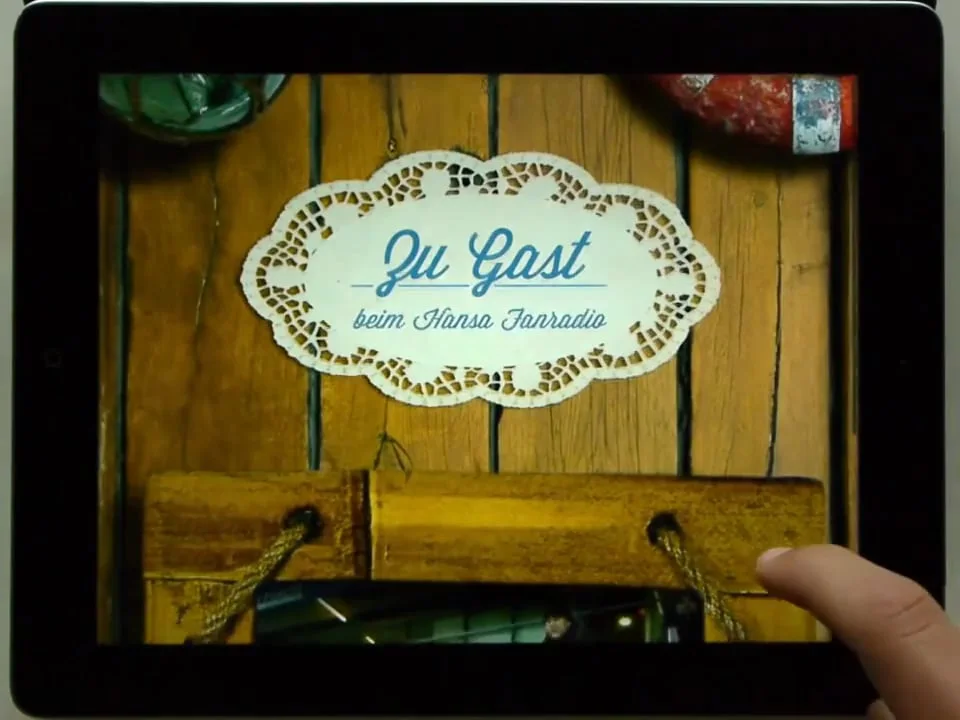
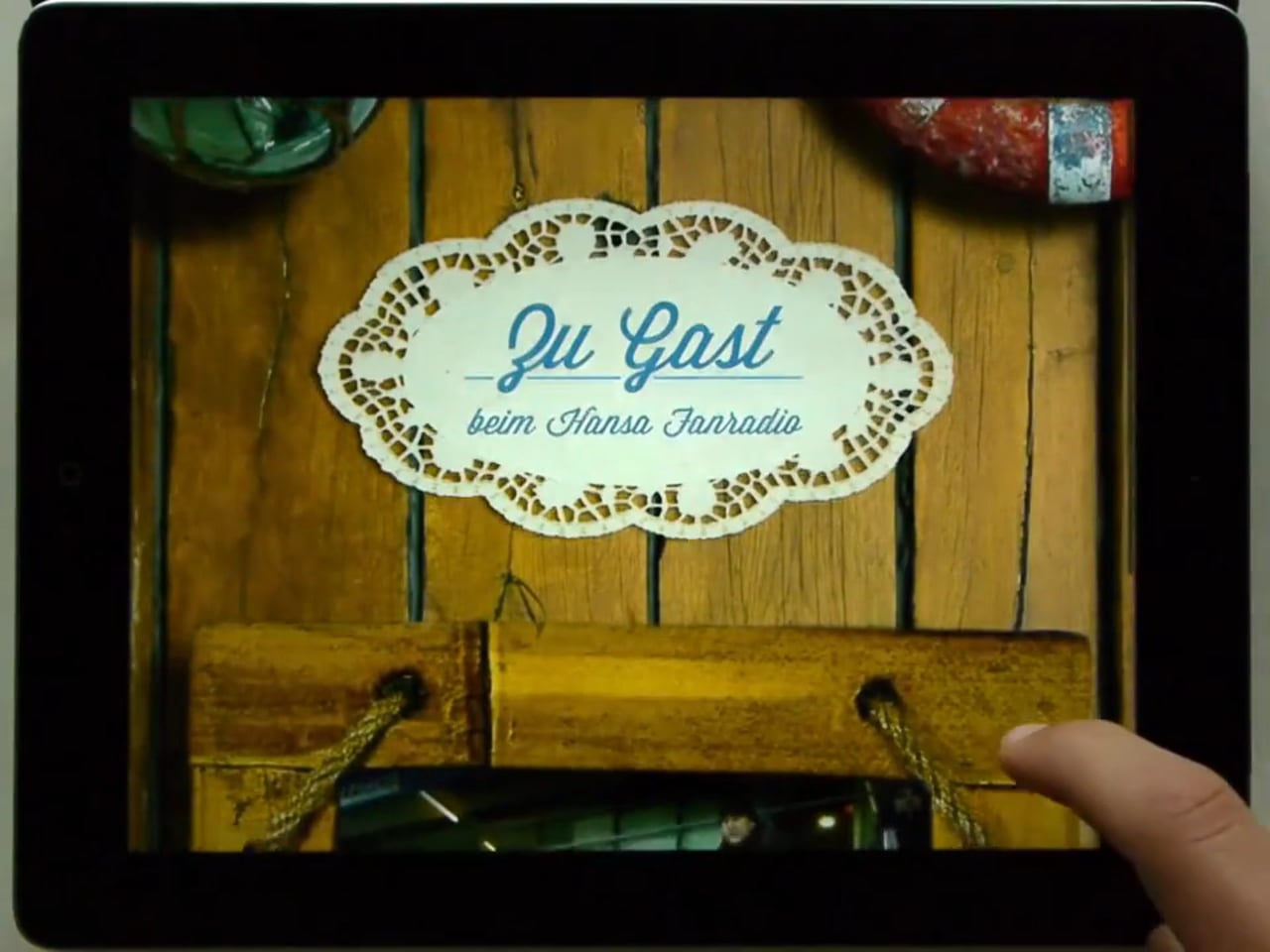
I created a working digital fanzine for FC Hansa Rostock. It brought together different stories and editorial formats within an interactive tablet publication, using typography, photography, interviews, animation, audio, video, and HTML embeds. A four-minute preview film shows the publication in use.
Looking back
Seemannsgarn was the point where editorial design stopped being a page-layout problem for me. I had learned how a football magazine works at 11FREUNDE, then used the thesis to ask what happened when a story could move, play sound, show video, or contain a live web element. I liked that each story could find its own form. That curiosity about matching the medium to the content is still part of how I approach digital products.