

Earlier work
DIVISYNO
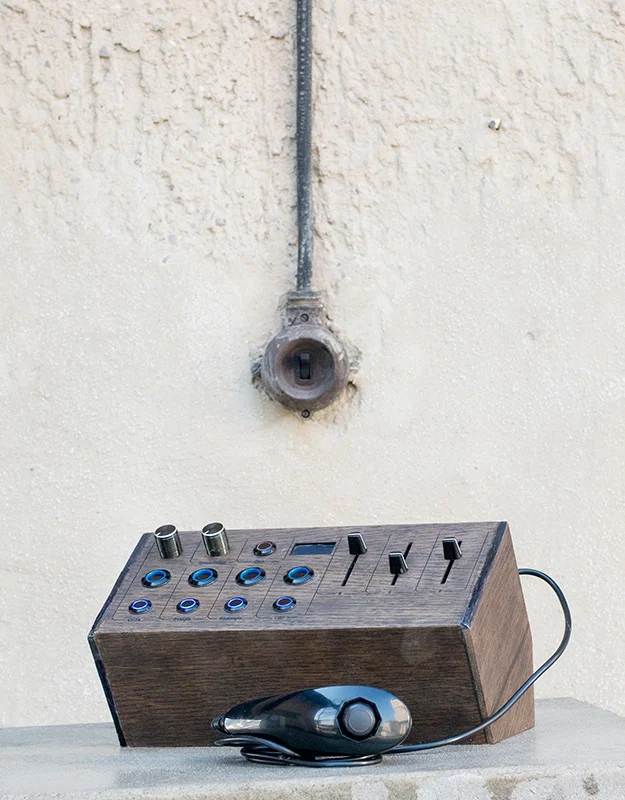
DIVISYNO is a digital video synthesiser built around an Arduino Due. I developed it as my master’s thesis, combining software, interface design, electronics, and a physical wooden enclosure in one working object.
Context
After working as a VJ for several years, I became interested in the way audio synthesisers could generate sound directly. DIVISYNO started with a simple question: could a relatively small microcontroller do something similar with moving images?
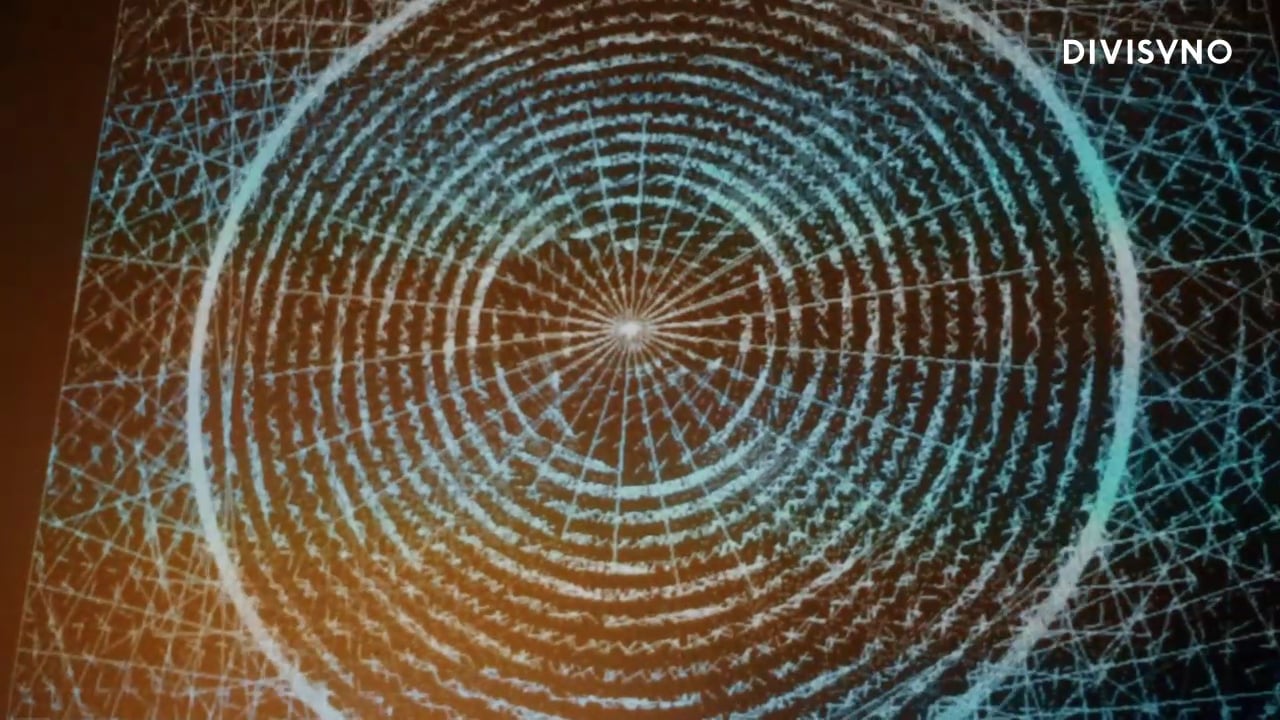
The aim was not to play back prepared video. The device generated animated geometric forms itself and sent them directly to a screen.
Building within the limits
The Arduino Due produced the video signal through the DueVGA library. During development, rotary encoders caused conflicts with the interrupts needed for video output, so I replaced them with push buttons. Analogue sliders adjusted the RGB signal separately.
The prototype ran at 800×600 pixels. Going higher would have slowed the visuals down too much, so the hardware limit became part of the design rather than a problem to hide.
From software to object
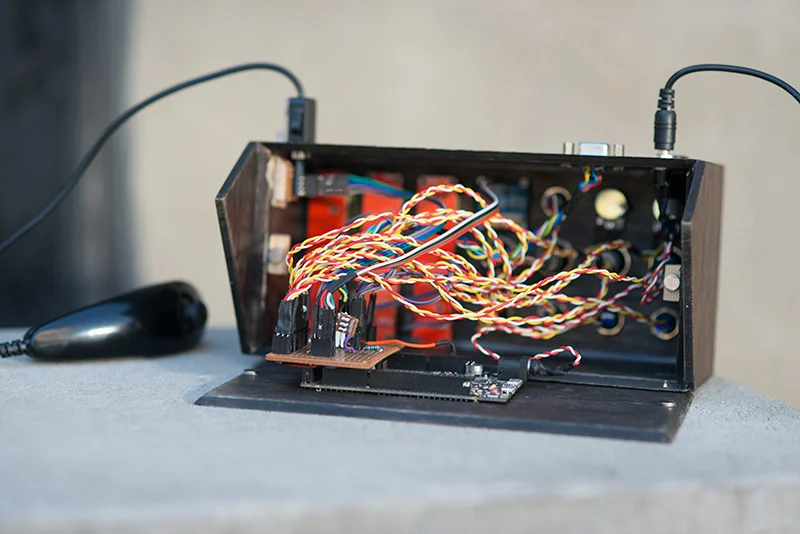
I wrote the synthesiser software and designed and built the casing. The front panel combines buttons, sliders, and additional controls in a compact wooden housing. Inside, the Arduino and hand-wired connections turn the interface into a self-contained instrument.
What was created
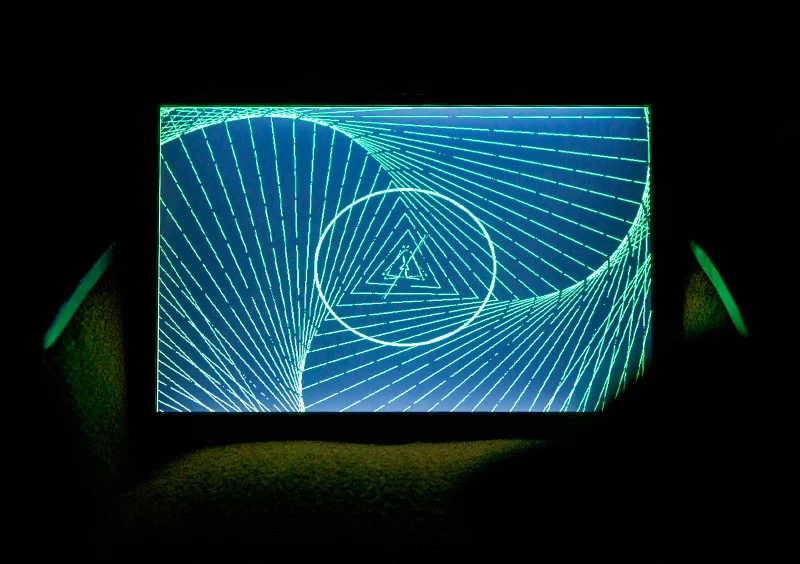
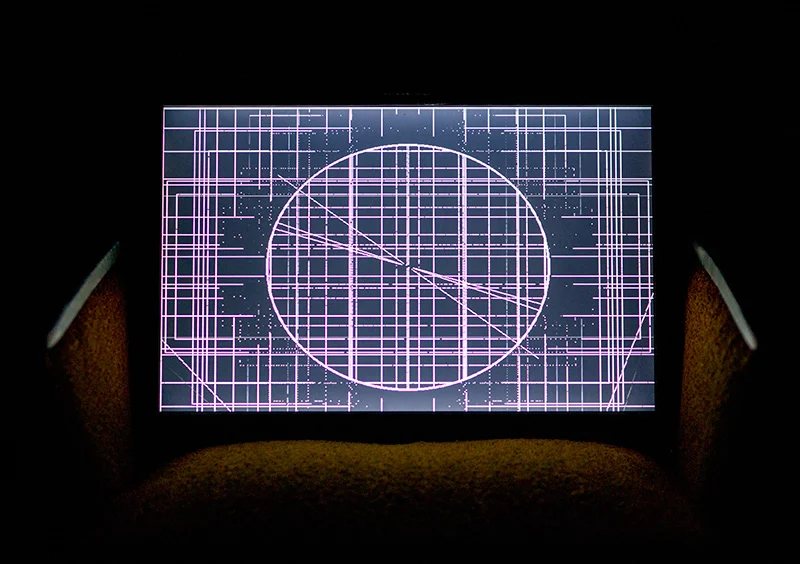
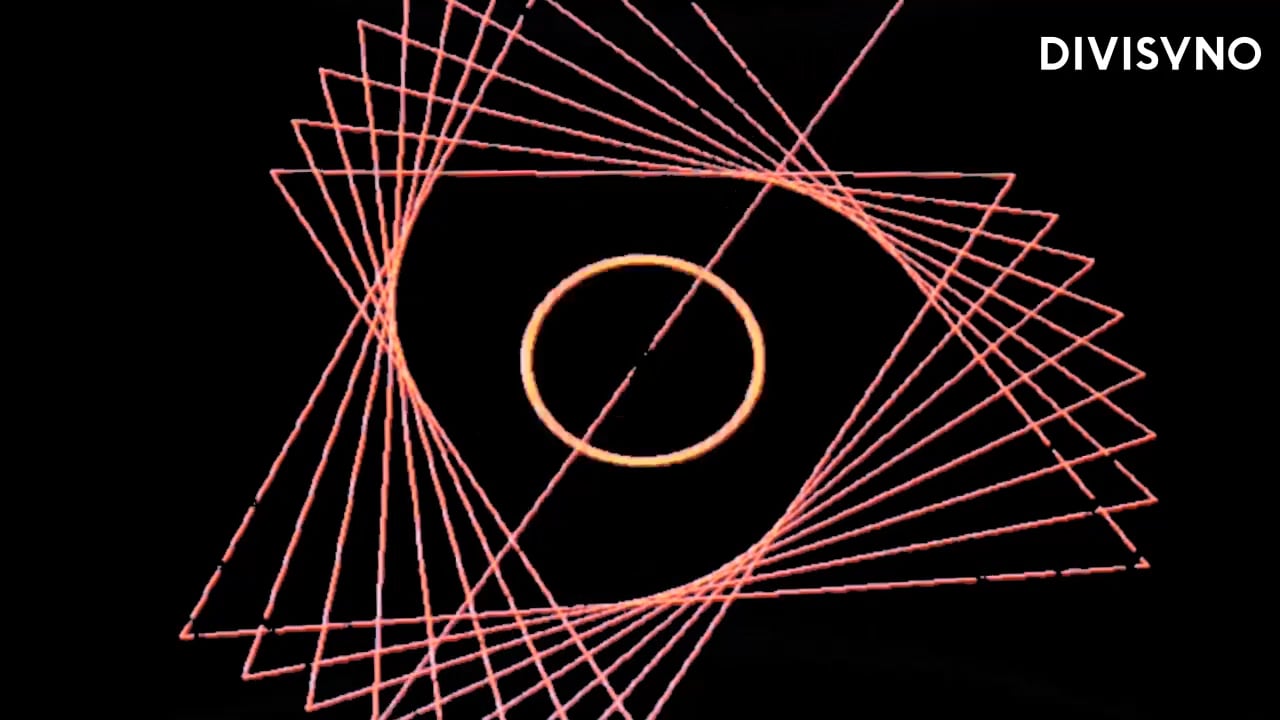
The result was a functioning, self-contained video synthesiser. Buttons and sliders controlled changing lines, circles, grids, colours, and layered geometric patterns in real time, while the wooden enclosure turned the electronics and software into a physical instrument.
Looking back
What I still like about DIVISYNO is how directly every part of it was connected. I wrote the software, worked around the limits of the Arduino, designed the controls, and built the wooden casing. A change in code became an image on the screen; moving a slider changed that image in real time. I built the complete chain from electronics and interface to the final object. Being able to use everything together and play the result like an instrument was what made the project so satisfying.